8 min read
Thekkady · Idukki · Kerala
Best: Oct – March
I almost missed Chellarkovil entirely. My auto driver mentioned it offhand on the way back from Thekkady — “small village, nice view, nobody goes” — and almost talked himself out of suggesting it. I told him to go anyway. That one detour turned out to be the sharpest memory from an entire ten-day trip through Kerala.
That’s the thing about this stretch of the Western Ghats. Periyar National Park gets the reputation, the guidebook space, the Instagram posts — and it earns all of it. But the towns, temples, and hill roads surrounding it carry a quieter kind of weight. If you’re already making the trip to Thekkady, it would be a shame to leave without seeing what’s sitting just outside the boundary.
Here’s what I’d tell a friend planning this trip.
1. Kumily: The Town That Smells Like a Kitchen
Most visitors treat Kumily as a logistical stop — somewhere to sleep, eat, and catch a jeep into the park at dawn. I did the same on my first visit, which I regret.
Go to the spice market on a weekday morning, ideally before 9 am when the tour groups haven’t arrived yet. Vendors sell cardamom, black pepper, star anise, and dried turmeric sourced directly from farms in the hills above town. Most of them will open jars for you, let you smell, answer questions without any particular urgency to make a sale. I spent the better part of an hour at one stall talking to a woman who had been selling there for over two decades — she explained the difference between two cardamom varieties by crushing a pod from each between her fingers and holding them under my nose. The difference was obvious. I’d never have noticed it on my own.
▶ Practical Tip
Prices at the market are fair but not fixed. A gentle back-and-forth is normal and expected — don’t feel awkward about it. Carry cash; most vendors won’t touch a card reader. Plantation homestay walks typically cost ₹300–₹600 per person and are bookable on arrival.
A handful of plantation homestays on the edge of town run morning walks through their spice land. These are proper walks, not shows put on for tourists. One family I stayed with grew cardamom, pepper, and coffee on the same hillside and harvested all three at different times of year. The walk took ninety minutes and covered more about Kerala’s agricultural economy than any museum exhibit I’ve been to.
2. Mangala Devi Temple: One Day a Year, Completely Worth Planning Around
About 15 kilometres from Thekkady, inside dense forest at around 1,337 metres above sea level, the Mangala Devi Temple opens to visitors exactly once a year. The date shifts annually — it falls on the Chithra Pournami full moon night, usually sometime in April or May.
If your trip can be timed around this, rearrange whatever you need to rearrange. The trek in takes you through old-growth forest where the canopy is thick enough to block most of the sky. On the festival day, pilgrims come from both sides of the Kerala–Tamil Nadu border carrying offerings, moving in quiet processions along the same path. The temple itself is small, ancient, and almost completely without the commercial apparatus that surrounds most accessible pilgrimage sites in India.
“It felt genuinely old in a way that’s increasingly hard to find.”
▶ Practical Tip
Outside festival season, apply for a forest department permit at the Thekkady range office — permits are processed the same day if you arrive early. Carry water, wear closed shoes, and hire a guide. Mobile signal vanishes about twenty minutes in. Tell someone where you’re going before you head in.
3. Vandiperiyar: Where Nobody Is Performing for You
Vandiperiyar is 30 kilometres from Thekkady along a road that rolls through tea estates and rubber plantations, and it is, on the surface, completely unremarkable. A bus stand, some shops, a few restaurants, people going about their day. No viewpoints, no waterfalls within walking distance, no obvious reason to stop.
I stopped there for breakfast on the way back from a morning hike and found myself staying for two hours. The restaurant I walked into had four plastic tables and a handwritten menu on a chalkboard. I ordered parotta and beef curry — ₹80 for a plate — and ate while watching the town move through its morning. Buses pulled in and emptied out. A man carried a bunch of bananas on his head across the street. A group of schoolgirls in uniforms walked past arguing about something with great seriousness.
Nobody was performing anything for anyone. That’s rarer than it sounds in a tourist-heavy region.
▶ Practical Tip
Thommankuthu waterfall is 8 km outside town — far fewer visitors than the falls near Thekkady. A local auto driver will take you there and wait for ₹300–400 return. Worth every rupee.
4. Chellarkovil: The View My Auto Driver Almost Didn’t Mention
Right on the Kerala–Tamil Nadu border, Chellarkovil sits on a ridge that falls away sharply into the Tamil plains below. From the viewpoint, on a clear morning before the haze builds, you can see across that flat land so far that the distance starts to feel abstract.
What sets it apart from other viewpoints in this region isn’t the view itself — it’s what’s missing. No tea stalls, no vendors, no selfie crowd, no designated photo spots with painted footprints telling you where to stand. A few houses, a small temple, some farmland, rocky streams running below the ridge. The village looks exactly like it looked twenty or thirty years ago, and that absence of development is, right now, its best quality.
I sat at the edge of the viewpoint for almost an hour without seeing another tourist. A local man came and sat nearby, we exchanged nods, he drank tea from a flask, we both looked out at Tamil Nadu for a while, and then he left. That was it. Sometimes that’s the whole point.
▶ Practical Tip
Get there before 8 am for the clearest views. The road up is narrow — a small car or bike is easier than a large vehicle. No ATM in the village, and phone signal is unreliable. Sort both before leaving Thekkady.
5. Idukki Wildlife Sanctuary: The One Serious Birders Come For
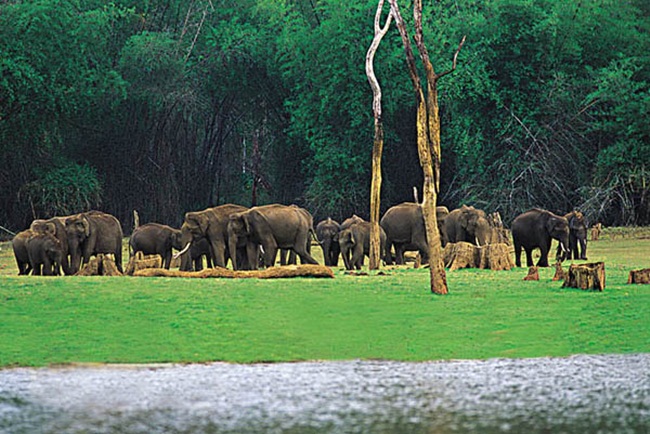
North of Periyar, Idukki Wildlife Sanctuary covers around 70 square kilometres and shares a gene pool with its more famous neighbour — leopards, sambar deer, Malabar giant squirrels, wild boar. The difference is footfall. Periyar handles hundreds of visitors on a busy day; Idukki gets a fraction of that.
I went in with a naturalist guide from Thekkady who works both parks. Inside Idukki, he stopped talking about the mammals almost entirely and focused on the birds — Malabar trogons, Nilgiri wood pigeons, great hornbills moving between the canopy in pairs. “Periyar is good,” he told me at one point. “But for birds, you come here.” He’d been guiding for eleven years. I trusted his opinion.
▶ Practical Tip
Entry permits are handled through the District Forest Office in Painavu. Book a guide through a Thekkady-based naturalist company a day in advance rather than searching on arrival. The full-day option is worth it over the half-day.
6. Pampadumpara: Cold Mornings, Old Forest, No Rush
Pampadumpara sits deep inside the Cardamom Hills, and the road in tells you everything you need to know about what you’re getting into. It narrows as you climb, the plantations press close on both sides, and by the time you arrive the air smells strongly of spice and damp soil and something underneath both that I can’t quite name.
A birder I met on the trail had come from Bangalore specifically for a species she’d been trying to tick for three years. She found it on her second morning. I didn’t fully understand her excitement, but it was contagious. The endemic species here — Malabar grey hornbills, Kerala laughingthrushes — don’t appear anywhere else on the planet.
You don’t need to be a birder to come here. The forest is old and genuinely dense, the paths are manageable, and there’s a quality of silence that takes a while to settle into. Not quiet — birds, wind, the creak of trees — but the kind of deep silence underneath all that sound that cities spend years training you to forget exists.
▶ Practical Tip
Peak wildlife activity is before 7 am and after 4 pm. Bring a warm layer even in dry season — mist rolls in without warning. Basic food is available in the village; don’t count on much beyond tea and simple meals.
The Practical Stuff: When to Go & How to Get There
Quick Travel Facts
Best seasonOctober – March (clear skies, best wildlife sightings)
AvoidJune – September (heavy monsoon, trails close, leeches)
From Kochi~4 hrs by road · KSRTC bus ₹150–200 · taxi ₹2,500–3,500
From Madurai~2.5 hrs by road
Day hire car₹1,500–2,000 for 8 hrs · autos work for short runs
CashCarry enough for 2 days — ATMs in Kumily/Thekkady run dry on busy weekends
The park will look after itself. Periyar always does — it’s been doing it since 1978. But give the surrounding hills a day or two, follow a local tip you’d otherwise talk yourself out of, and there’s a good chance it becomes the part of the trip you’re still thinking about six months later.
It was for me.
In this guide
- 1 Kumily — Spice Market Town
- 2 Mangala Devi Temple
- 3 Vandiperiyar
- 4 Chellarkovil Viewpoint
- 5 Idukki Wildlife Sanctuary
- 6 Pampadumpara
- 7 Travel Tips & Logistics
Plan Your Periyar Trip
Handpicked Kerala packages with expert-guided experiences, curated stays, and hassle-free logistics.
Essential info
🌿Best time
October – March
📍Base town
Thekkady / Kumily
🚌Nearest city
Kochi (4 hrs) · Madurai (2.5 hrs)
💰Day hire car
₹1,500 – 2,000